Surgical Directions Launches Rapid SPD Diagnostics as Healthcare Systems Face Growing Sterile Processing Risks
PR Newswire
CHICAGO, Sept. 23, 2026
New white paper reveals widespread operational, regulatory, and governance vulnerabilities across inpatient and ambulatory sterile processing environments
CHICAGO, Sept. 23, 2026 /PRNewswire/ -- Surgical Directions, a leading healthcare solutions company specializing in procedural care optimization, today announced the launch of its new Rapid SPD Diagnostics product, a cost-effective and comprehensive assessment solution designed to help health systems establish enterprise-wide sterile processing baselines, identify operational vulnerabilities, improve regulatory readiness, and strengthen governance structures across both inpatient and ambulatory settings.
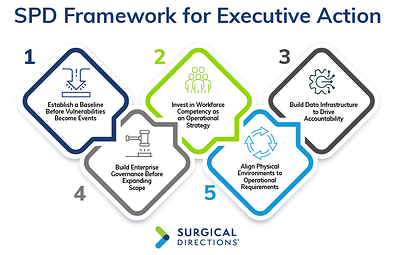
The announcement accompanies the release of the company's newest white paper, Rapid SPD Diagnostics: Establishing a Baseline for Regulatory Readiness, Operational Excellence, and Sustainable Sterile Processing Governance Across Healthcare Systems, which outlines findings from rapid diagnostic assessments conducted across two large, complex healthcare organizations.
The white paper examines sterile processing challenges identified within a high-volume academic medical center and a large, decentralized ambulatory clinic network spanning more than 100 outpatient locations. Despite significant differences in organizational structure and care environments, both assessments revealed remarkably similar themes surrounding operational variation, governance fragmentation, workforce competency gaps, documentation deficiencies, environmental infrastructure risks, and limited performance visibility.
"Sterile processing vulnerabilities are often operationally invisible until an accreditation survey, infection concern, or patient safety event exposes them," said Barbara McClenathan, Vice President of Nursing at Surgical Directions. "Rapid SPD Diagnostics helps healthcare organizations identify those gaps early and build a sustainable operational foundation before small issues become major organizational risks."
Sterile processing has become one of healthcare's fastest-growing operational and regulatory concerns as health systems continue expanding procedural services into ambulatory clinics, physician offices, cancer centers, imaging facilities, and specialty care environments. These concerns are due to:
- Up to 5% of surgical patients experience surgical site infections (SSIs), many of which are tied to improper instrument sterilization.
- Reprocessing a single surgical tray can cost approximately $80 or more, depending on an organization's cost structure.
- In a 15-OR hospital, losing just five surgical cases per day due to SPD-related disruptions can translate to approximately $750,000 in daily contribution margin loss.
According to the white paper, many organizations have expanded procedural capacity faster than sterile processing governance, operational standardization, and workforce infrastructure have evolved.
The Rapid SPD Diagnostics model was developed to provide healthcare executives with a comprehensive operational baseline before vulnerabilities escalate into accreditation findings, workflow disruptions, infection prevention concerns, or patient safety events. Unlike narrowly focused compliance reviews, the diagnostic evaluates the broader operational ecosystem surrounding sterile processing performance.
Assessment areas include:
- Workflow design and dirty-to-clean separation
- Instrument transport and containment practices
- Sterile storage integrity and environmental controls
- Competency validation and workforce education
- Documentation and traceability
- Regulatory readiness
- Governance and accountability structures
- Operational reporting and performance metrics
Across both healthcare systems assessed, Surgical Directions identified significant operational variation and decentralized risk exposure. Findings included inconsistent instrument cleaning practices, incomplete PPE compliance, unreliable documentation processes, fragmented governance structures, environmental deficiencies, inconsistent competency validation, and limited data infrastructure to support operational oversight.
The white paper also highlights the increasing scrutiny healthcare organizations face from accrediting agencies and infection prevention programs as sterile processing expectations continue evolving beyond sterilizer functionality alone. Modern evaluations increasingly assess workflow standardization, environmental controls, documentation integrity, competency validation, quality reporting, and enterprise accountability structures.
Key themes identified across both assessments included:
- Operational variation and workflow inconsistency
- Workforce competency and education gaps
- Governance fragmentation and accountability challenges
- Documentation and traceability deficiencies
- Environmental and infrastructure misalignment
- Lack of meaningful data and performance reporting
The white paper emphasizes that many sterile processing vulnerabilities remain hidden for years due to fragmented oversight structures and limited enterprise visibility, particularly across decentralized ambulatory environments.
"Healthcare organizations cannot improve what they cannot see," said Leslie Basham, President and CEO at Surgical Directions. "These diagnostics create visibility into operational gaps that frequently exist beneath the surface and provide healthcare leaders with a clear, prioritized roadmap for reducing risk and strengthening long-term operational performance."
According to the report, organizations that proactively establish sterile processing baselines are significantly better positioned to strengthen patient safety, improve survey readiness, reduce operational disruption, and support sustainable procedural growth.
The Rapid SPD Diagnostics product helps organizations gain:
- Visibility into operational variation across procedural settings
- Identification of systemic trends and regulatory vulnerabilities
- Prioritized improvement opportunities aligned to organizational risk
- Greater awareness of decentralized ambulatory processing gaps
- Stronger regulatory readiness and survey preparedness
- Alignment across operational, clinical, and administrative leadership
- Data infrastructure to support accountability and continuous improvement
The white paper concludes that sterile processing has evolved into one of healthcare's most strategically important operational functions and warns that organizations continuing to treat SPD as a background operational service may be accepting significant hidden risk. Assess the risk for your organization with a short quiz from Surgical Directions. Access the quiz here: https://www.surgicaldirections.com/campaign/spd-assessment/
The full white paper, Rapid SPD Diagnostics: Establishing a Baseline for Regulatory Readiness, Operational Excellence, and Sustainable Sterile Processing Governance Across Healthcare Systems, is now available from Surgical Directions. www.surgicaldirections.com.
ABOUT US
Surgical Directions™ is a healthcare solutions company specializing in surgical services, procedural care, sterile processing, anesthesiology, and radiology services. With a unique clinician-led model and proprietary analytics platform, Merlin™, the firm empowers hospitals and provider groups to drive measurable improvements in access, efficiency, and financial performance. From supply chain optimization to governance redesign, Surgical Directions delivers peer-to-peer partnership and clinical expertise that helps clients provide quality care and improve margins. Learn more at www.surgicaldirections.com.

 View original content to download multimedia:https://www.prnewswire.com/news-releases/surgical-directions-launches-rapid-spd-diagnostics-as-healthcare-systems-face-growing-sterile-processing-risks-302886759.html
SOURCE Surgical Directions